Altering Bottoms: Slimming Jeans
As with most pieces of clothes, bottoms vary widely because of personal style, fit, and, of course, the cut of the pattern.
Interestingly enough, when I first started out in alterations, I got a lot of inquiries about altering the fit of jeans - from a surprising amount of people!
But at the time, I always demurred from those jobs simply because I wasn’t yet skilled enough to tackle anything more than patching denim.
And I’m so glad I did, because I would’ve left many prospective clients deeply disappointed… at least from a financial stand-point.
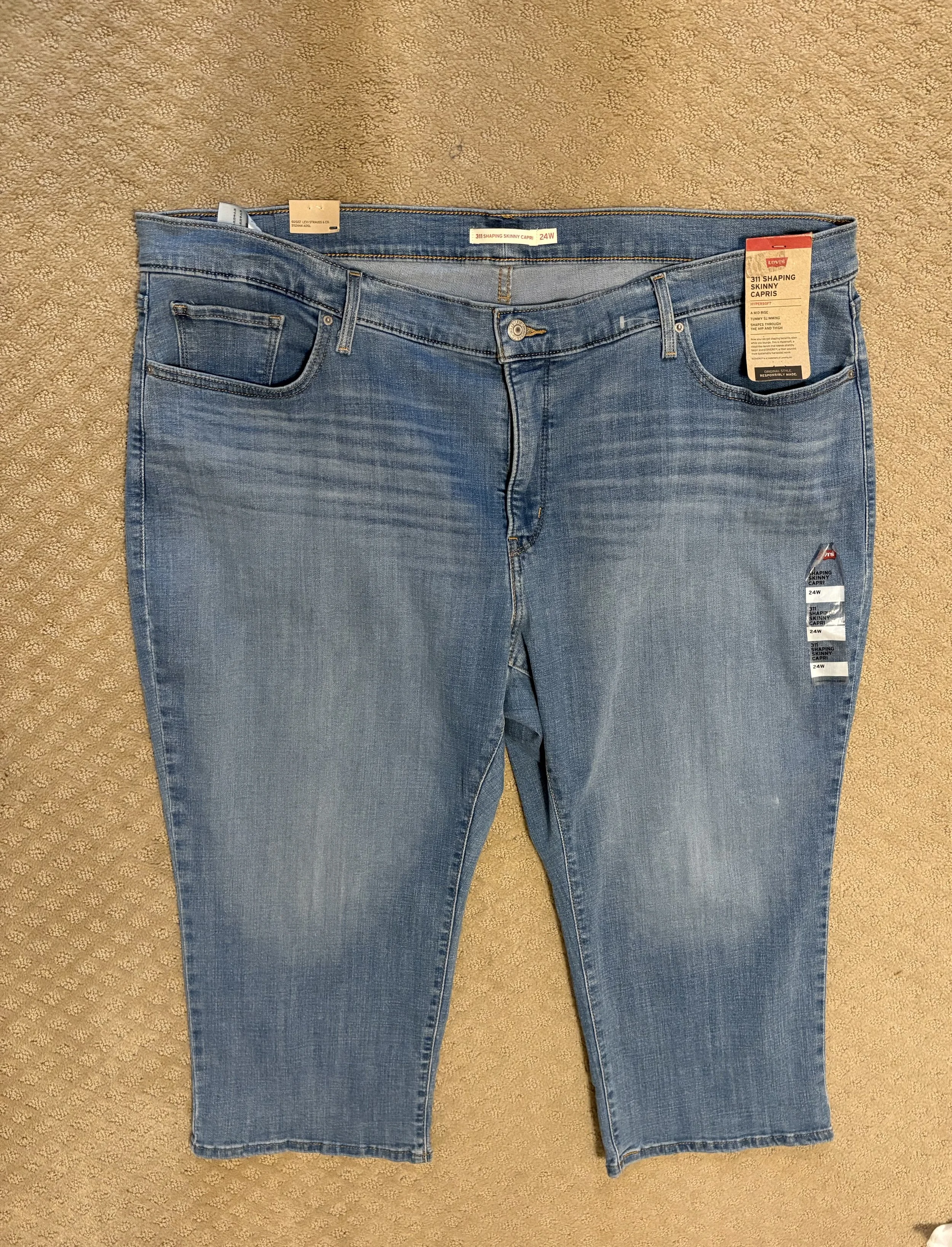
Levi’s Capri-style jeans; clearance
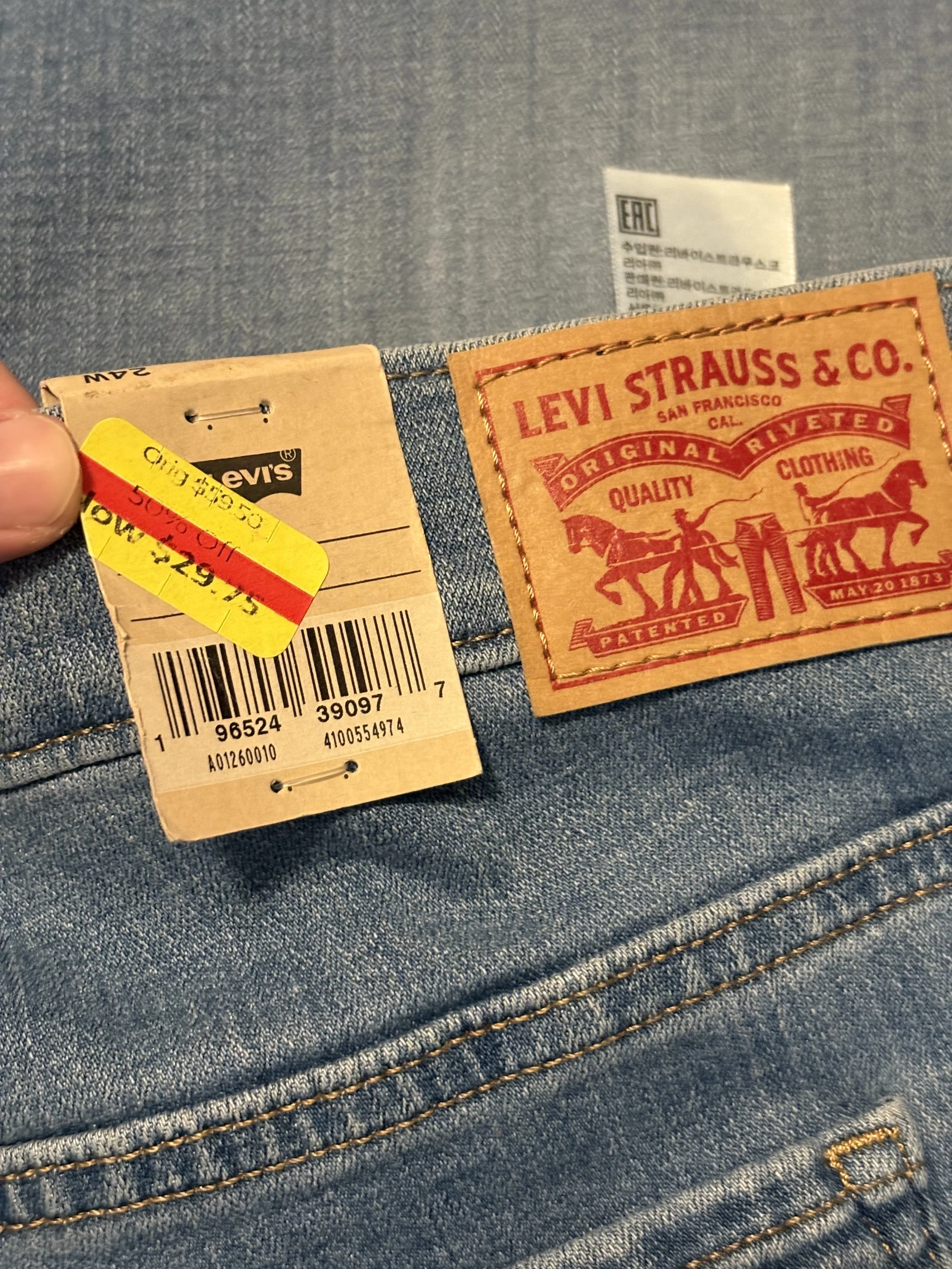
Discounted price: $29.75; Original price: $59.50
To demonstrate what I mean, let’s tackle this pair of Levi’s that are waaay too big for me - but were discounted at a price that was just too good to pass up!
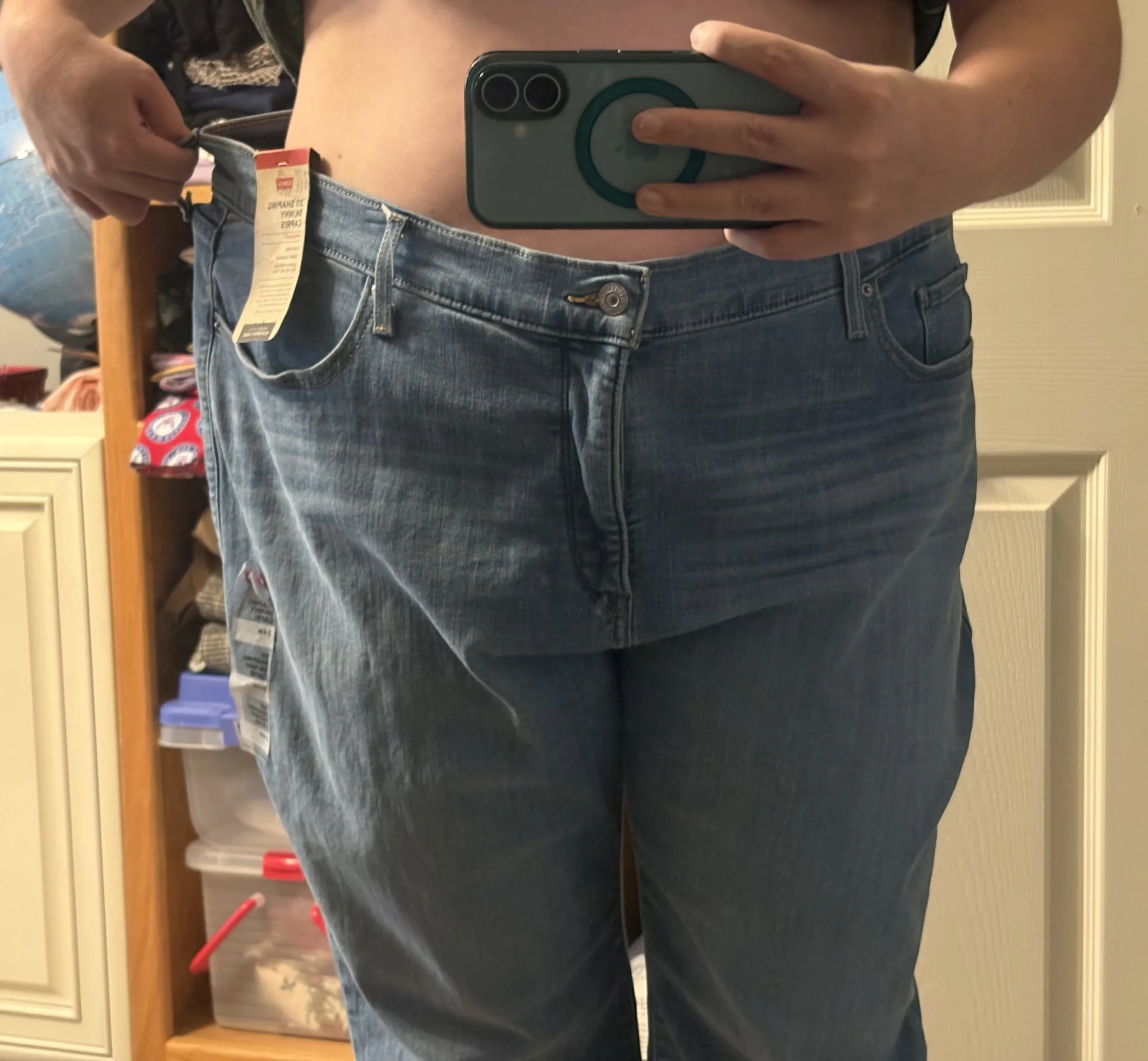
As you can see, these bottoms are so big they can’t even sit on my hips!
As of now, I wager that these Levi’s are roughly 4-6 inches too big for me. While that may not seem like a lot at first glance, it’s actually a very big number - coupled with the fact that this material as spandex woven into, which will only add to the amount that needs to be taken out! (it’s called negative seam-allowance, ironically enough - bare with me, I promise I will try to make it make sense, lol)
To give you an idea of what we’re dealing with here, here’s what I took directly from my notes when I started this project:
Slim the waist by minimum 4 inches (stretchy denim = 5 inches, negative seam allowance?);
Taper legs 4 inches along outer-seams; straight-leg;
Raise hem 3 inches??
Deepen pockets (wtf? who designed them?!)
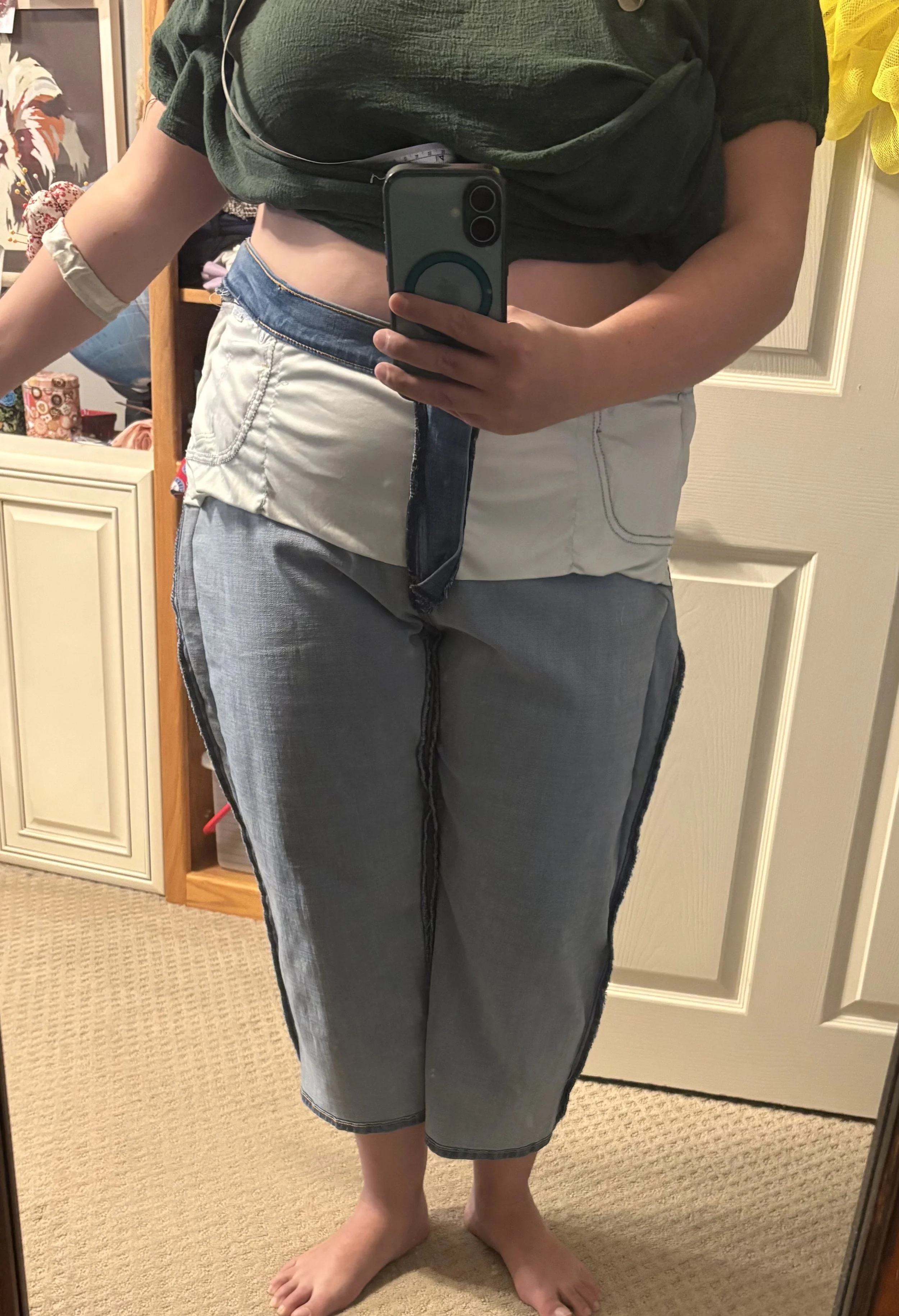
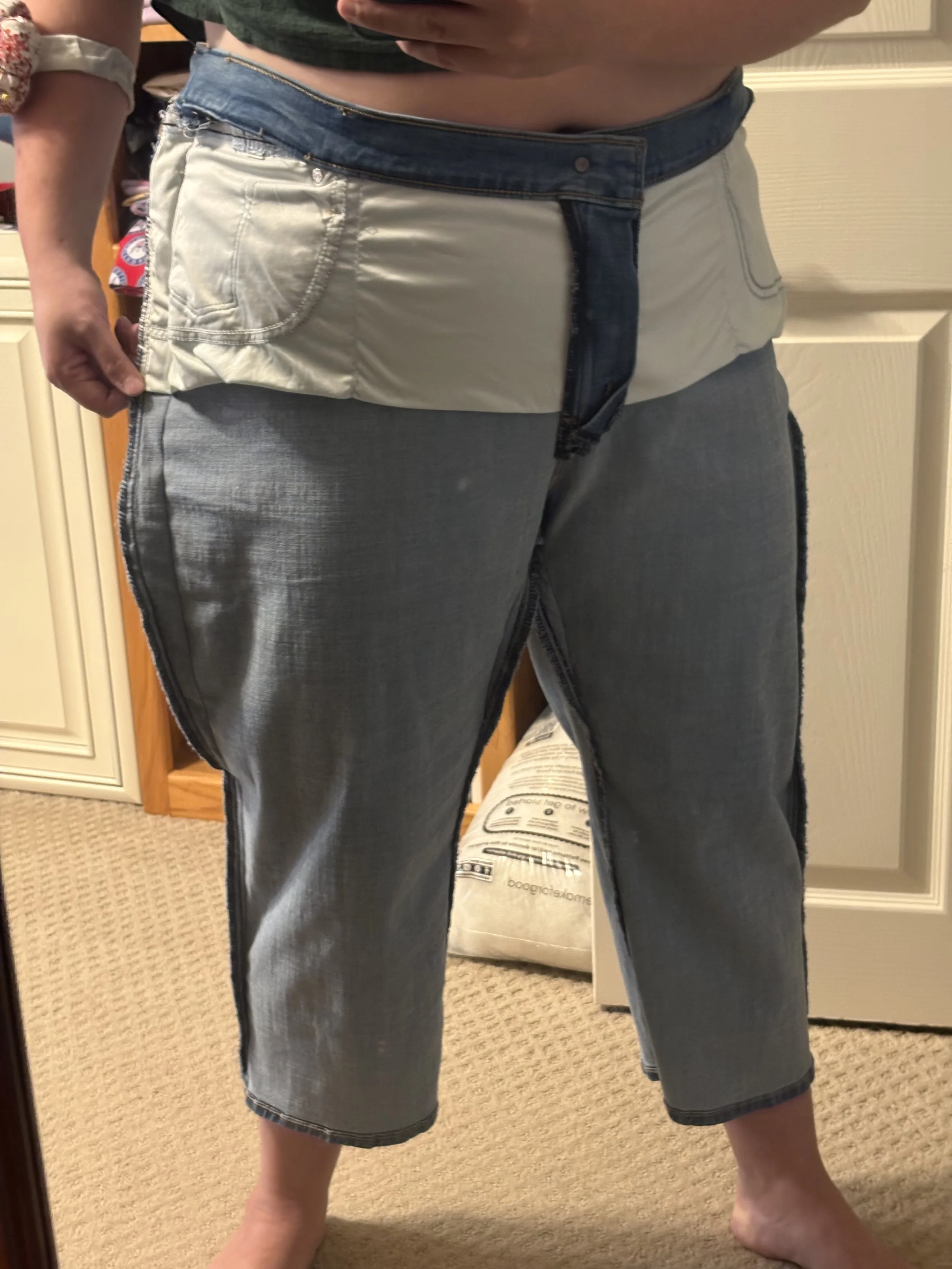
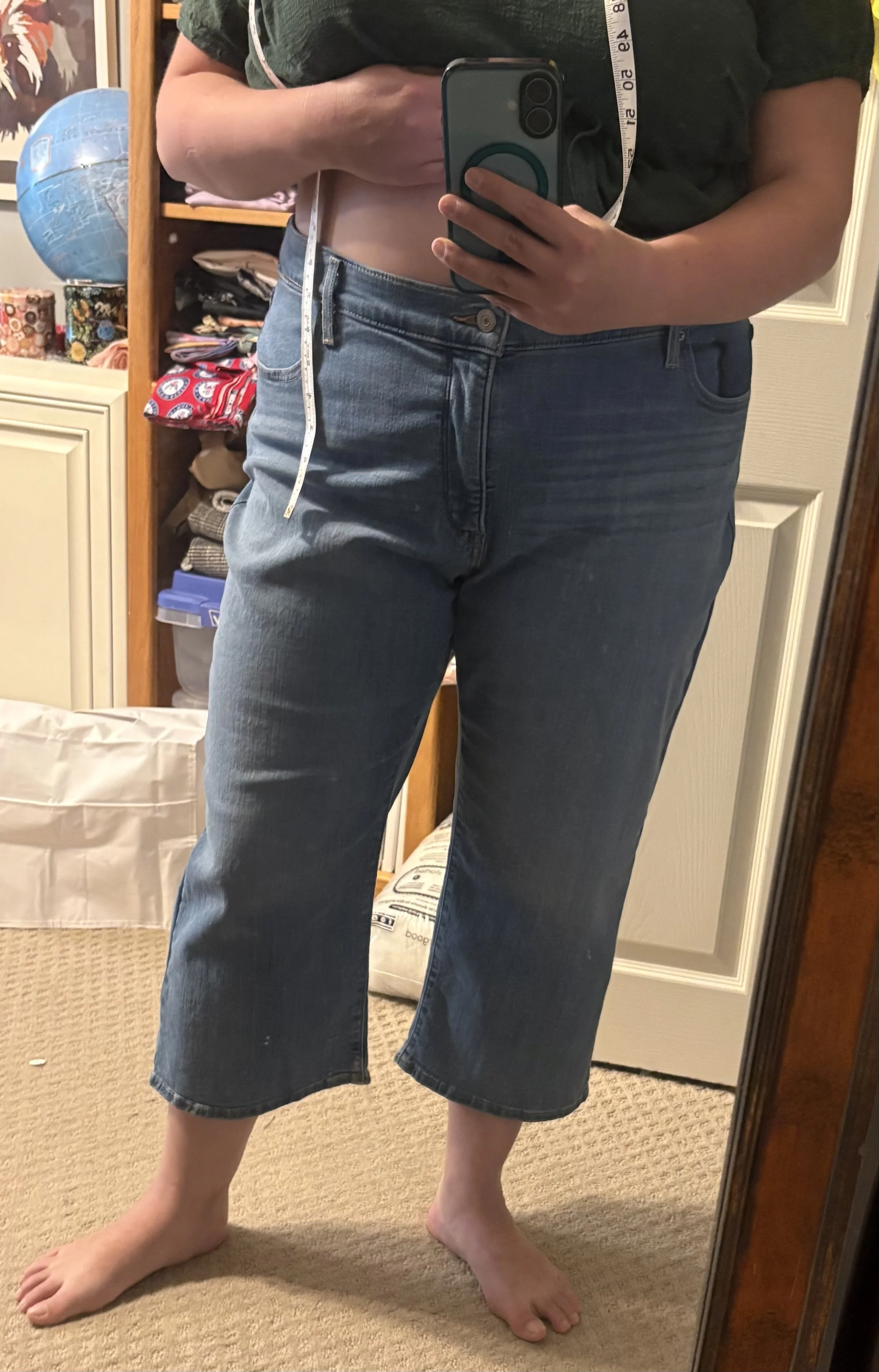
I know - I have very big feelings when I’m looking a garment in person.
The only downside I can see from taking-in the jeans along the side-seam, is that it will decrease the side of the pocket and require me to remove the metal rivet that helps reinforce it.
Personally, I can live without the rivet - I’m not too hard on my pockets as is, and I’m sure I could come up with some a little bit prettier - but loosing surface area for the pockets is kind of a bummer. Especially since they’re so short to begin with!
And (crap!) and made out of especially stretchy material, which I suspect is at least 50% spandex… you’re just begging for your valuables to get lost with that much stretch.
Quick aside for my non-sewing friends, or friends just starting out sewing: I’ve always operated under the school of “side-seams supreme” when taking in a pair of denim bottoms. It helps maintain their shape, and is, what I consider, a more “flexible” access point: side seams can always be reinforced more, but if you blow out the crotch or buttocks on your jeans, you can kiss those babies goodbye.
Because fit is the immediate concern, I’m going to first focus my efforts on slimming the Levi’s so that I can actually wear them - without running the risk of a very public wardrobe malfunction.
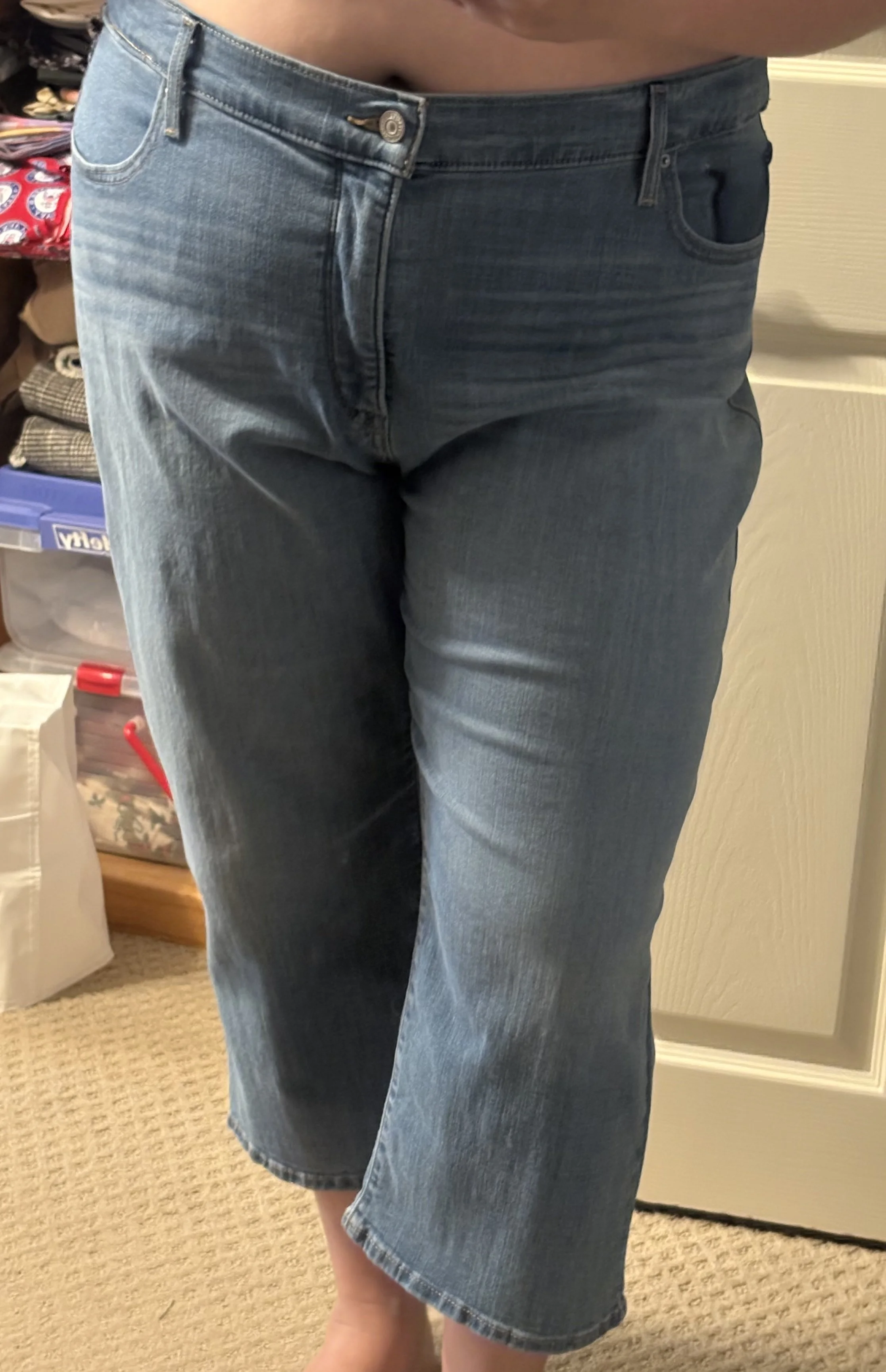
Levi’s after first slimming; at this stage I ignored my instincts and only slimmed the waist by 4 inches instead of 5 - so I had to go back and redo them.
In the end, I decided to leave the hems as are - for now - even though I don’t really like the look of denim Capri’s (now Khakis are a different story - because they’re made of different materials, and because they keep me cooler during my summer volunteering).
As for the pockets, I’m actually saving those for a separate entry. The other day, while I was putting away my laundry, it dawned on my just how many of my slacks and bottoms need major pocket-adjustments… and every single one of them is completely different from the other!
In the meantime, I just needed to go over my final notes and rates for a hypothetical counterpart (in case you’re looking to have these adjustments made to your clothes):
Final Price:
So, I actually set my hourly rate at $16/hour … and that’s actually on the lower-side, believe it or not.
I only use this rate when I’m up on a project or commission with too many unknown variables for me to account me - meaning, I’ve never done this type of job before, and I have no idea what I willandwon’t know until I actually dig in.
In this case, I wasn’t entirely sure about slimming and tapering a pair of denim pants, because it’s been a few years since someone even made that request (slacks and pajama bottoms, however, are a completely different story).
The amount of time it took to:
take in the waist,
taper the legs to create a straight-leg cut,
then stitch it all back together (including reinforcement on the side-seams)
rounds out to 2 and half hours… which means that it would cost a prospective client roughly $40 for these same alterations…
I know right?
Considering that their original price was just around $60 - and the discounted price fell to half of that ($30 and change) - I personally would recommend that the hypothetical client should consider thrifting a replacement pair, depending on their personal disposable income.
The Rationale:
I know it’s a little goshe to bring it up, but that’s also kind of the point of this blog: to discuss the actual cost and investment-value of clothing alterations - so that you understand when to best utilize them.
The fact is, I’ve actually had clients who have bulked at such a price as $30-40 for a single job… while others have openly told me that they thought I was undercharging for that price.
Ultimately, for me at least, it comes down to juggling between apples and oranges. And I mean JUGGLING.
While $40 for one garment can seem too small a fee, it’s actually more than enough to compensate for my time and skill - primarily because that knowledge has become second-nature to me, and the materials are probably kept on-hand year-round (so it is literally no extra cost to anyone).
Meanwhile, $40 for one garment can seem too steep a fee, because the client made their purchase on “clearance” and the adjustments are so small you can barely notice them…
(quick aside: these are also the same clients who happen to drive new BMW’s around town - not saying anything, just food for thought).
The very big BUT between the two is this: every single garment is adjusted for a completely different size.
What person B needs may not even come close to what person A needs for just the right fit.
Additionally, the clients aren’t just paying for hours and materials rendered - they’re paying for an expertise they don’t have the time (or possibly interest) in learning:
A skilled and well-seasoned seamstress, sewist, or tailor, can clearly explain why two materials are not alike; why X, Y, & Z adjustments are needed for your unique fit; and why it’s better to replace this garment C while repairing/adjusting garment D.
I have always believed that our modern interpretation of fast-fashion has deliberately clouded these waters; in taking advantage of (and, I would argue, perpetuating) consumers lack of knowledge for quality - in both materials and skill set - they intentionally leave consumers (their own customer-base) vulnerable to predatory practices… and in the dark about financially-sustainable alternatives.
(not saying anything, just food for thought)
This is something that has always made me angry. Because I don’t like seeing other people taken advantage of, for any reason.
As someone who’s been on that side of the aisle, and at a very young age, I take it very personally.