Fun with Amigurumi
My first encounter with Amigurumi (crocheted or knitted toys), was actually during childhood - long before the term entered the public lexicon.
(watch the wise-cracks, Younglings)
My grandmother was a seasoned seamstress and artist, and was well-versed in knitting and sewing. By the time I was 7 years old, however, she had started to teach herself how to crochet, and came up with an adorable pink-tutu teddy bear.
But during those dark ages of the late 1990’s, no one really had a generalized name for these kinds of projects (at least not that I can remember).
And that’s not so surprising.
Grandma made this bear for me during the last few years before the internet-boom… an event that forever changed the way we access all kinds of information. The term “Amigurumi” has existed in Japan since the 1970’s, but very few people here in the States (at least in my very tiny social circle) were aware of it or it’s meaning.
Growing up, creatives and recipients were more likely to use terms like “Plushies,” “Stuffies,” “Teddies,” or even just straight-up call them dolls
(NOTE: I suspect this is a primary reason why these kinds of gifts were usually reserved exclusively for girls back in the day… but that’s research for another day!)
The story of Amigurumi and how it became a global phenomenon of the 21st century is absolutely fascinating! I plan to dedicate an entire research project to it later in the future, but for now I would absolutely encourage everyone to check it out for themselves.
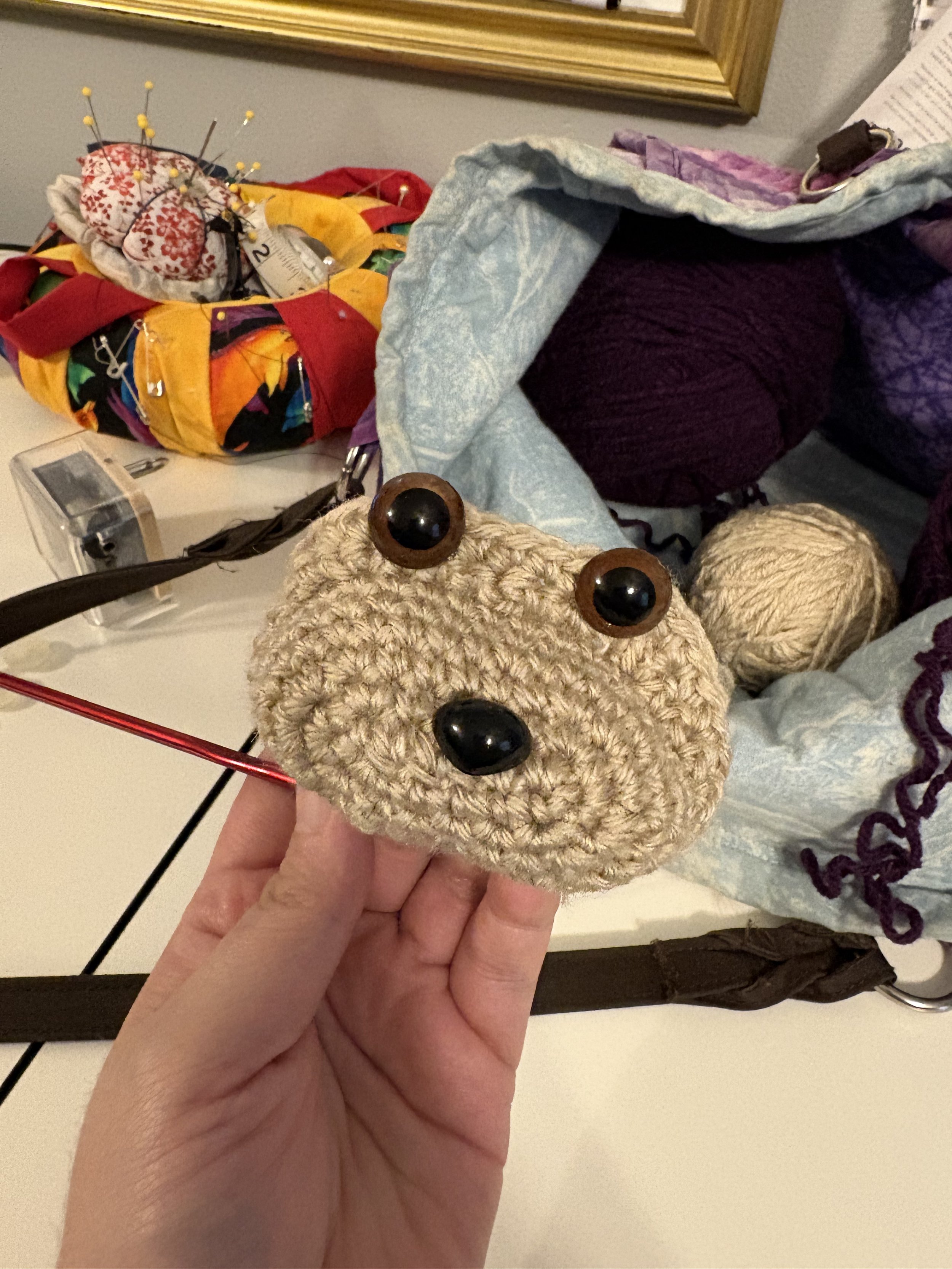
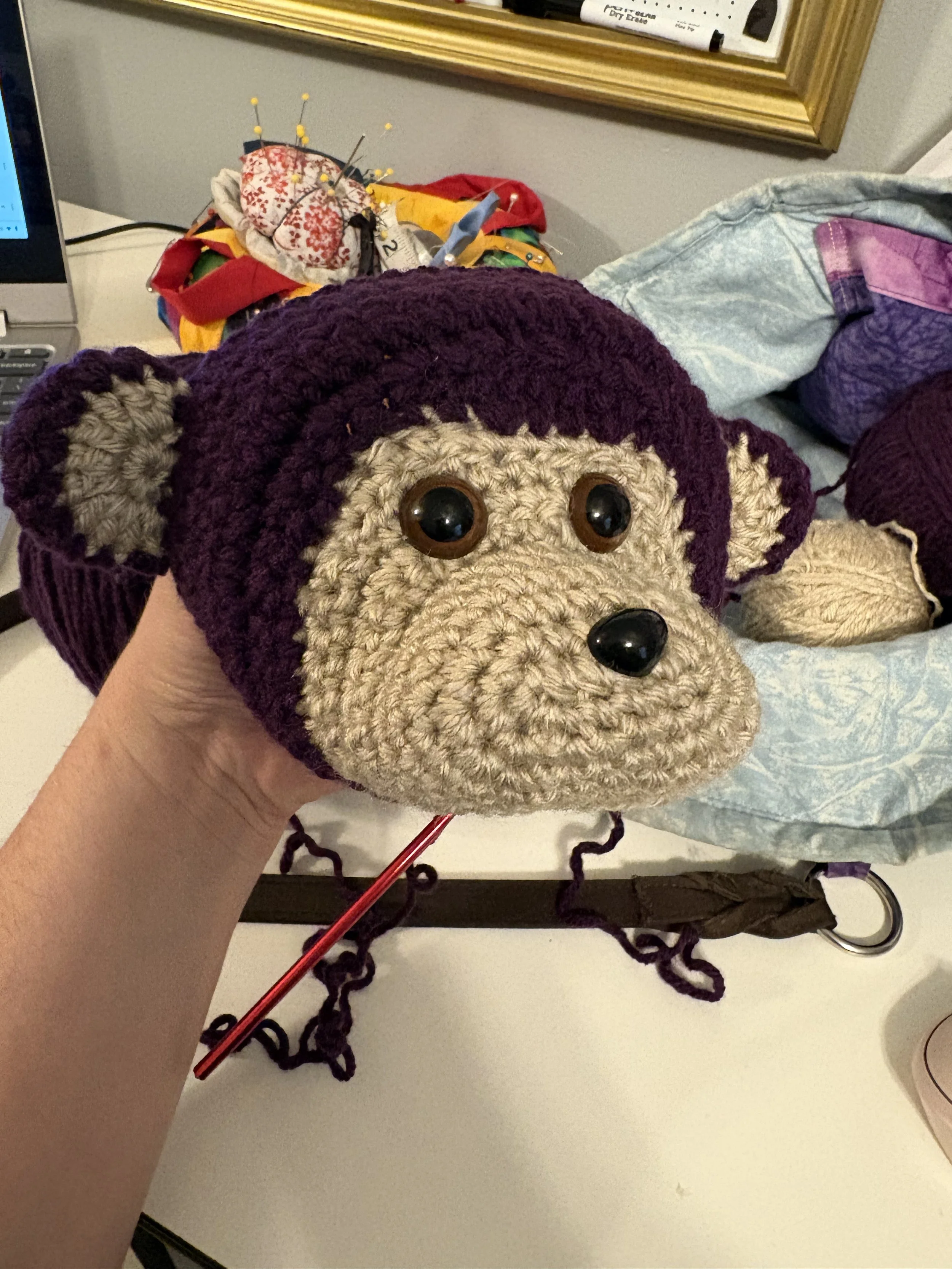
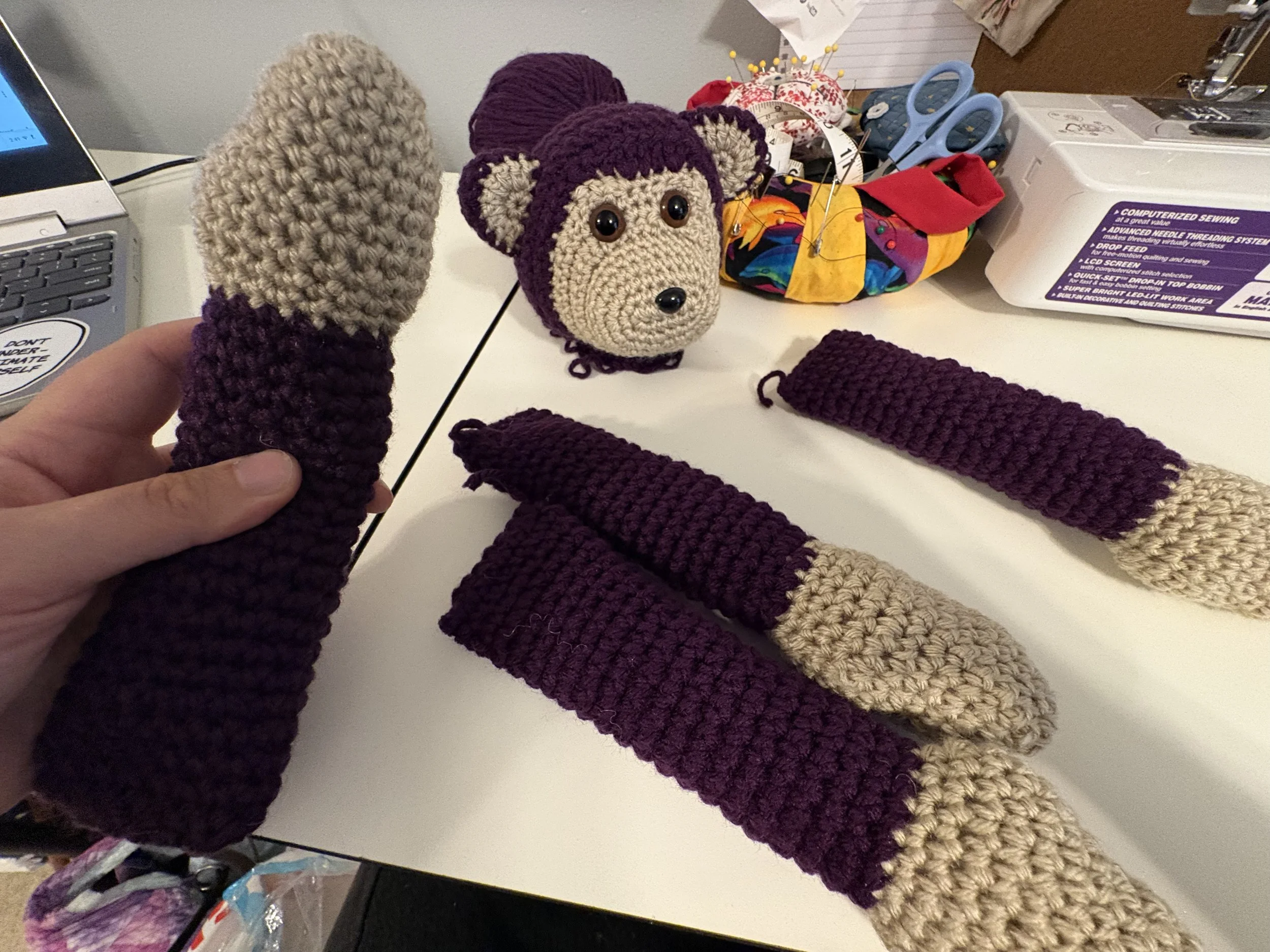
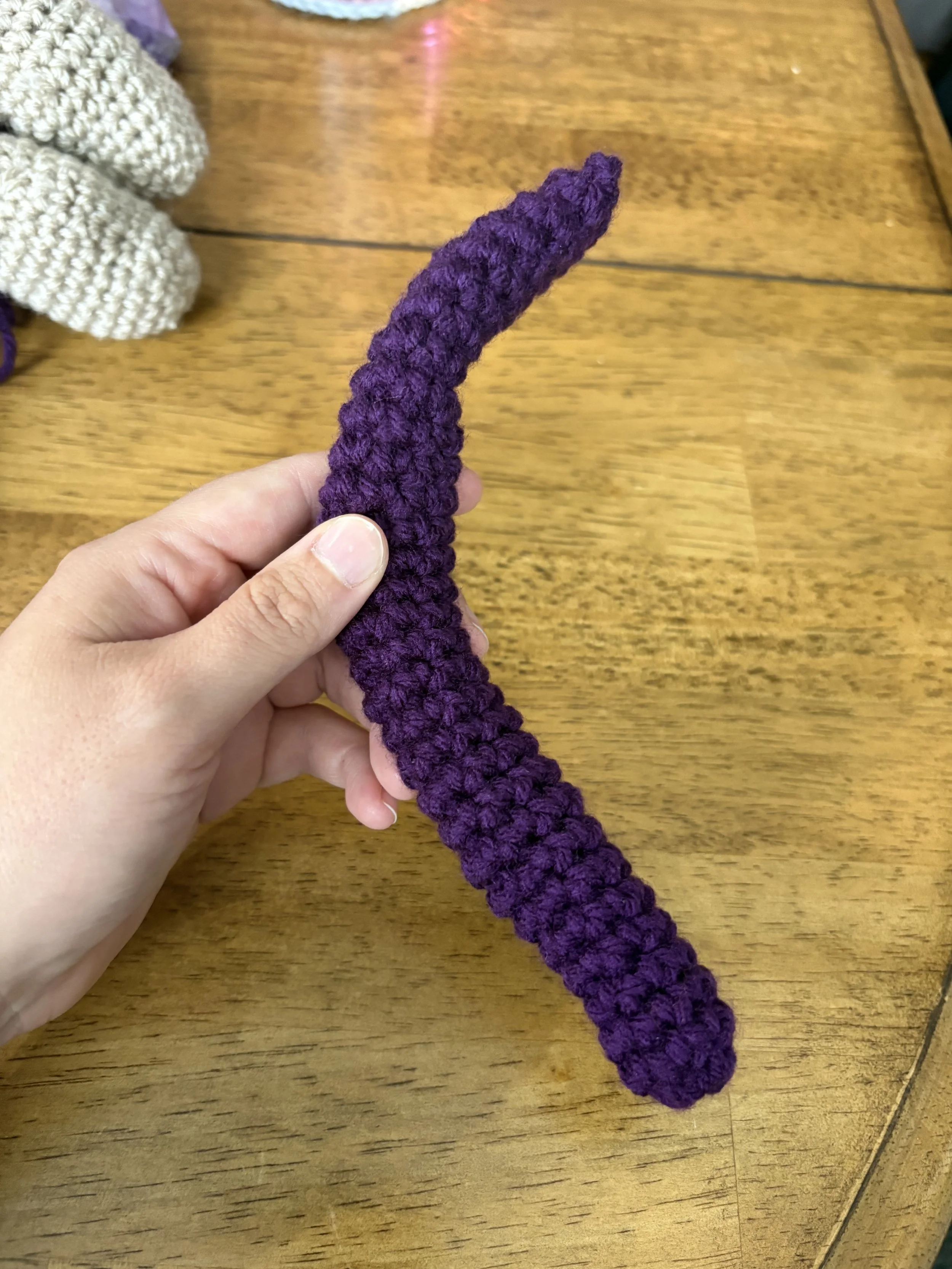
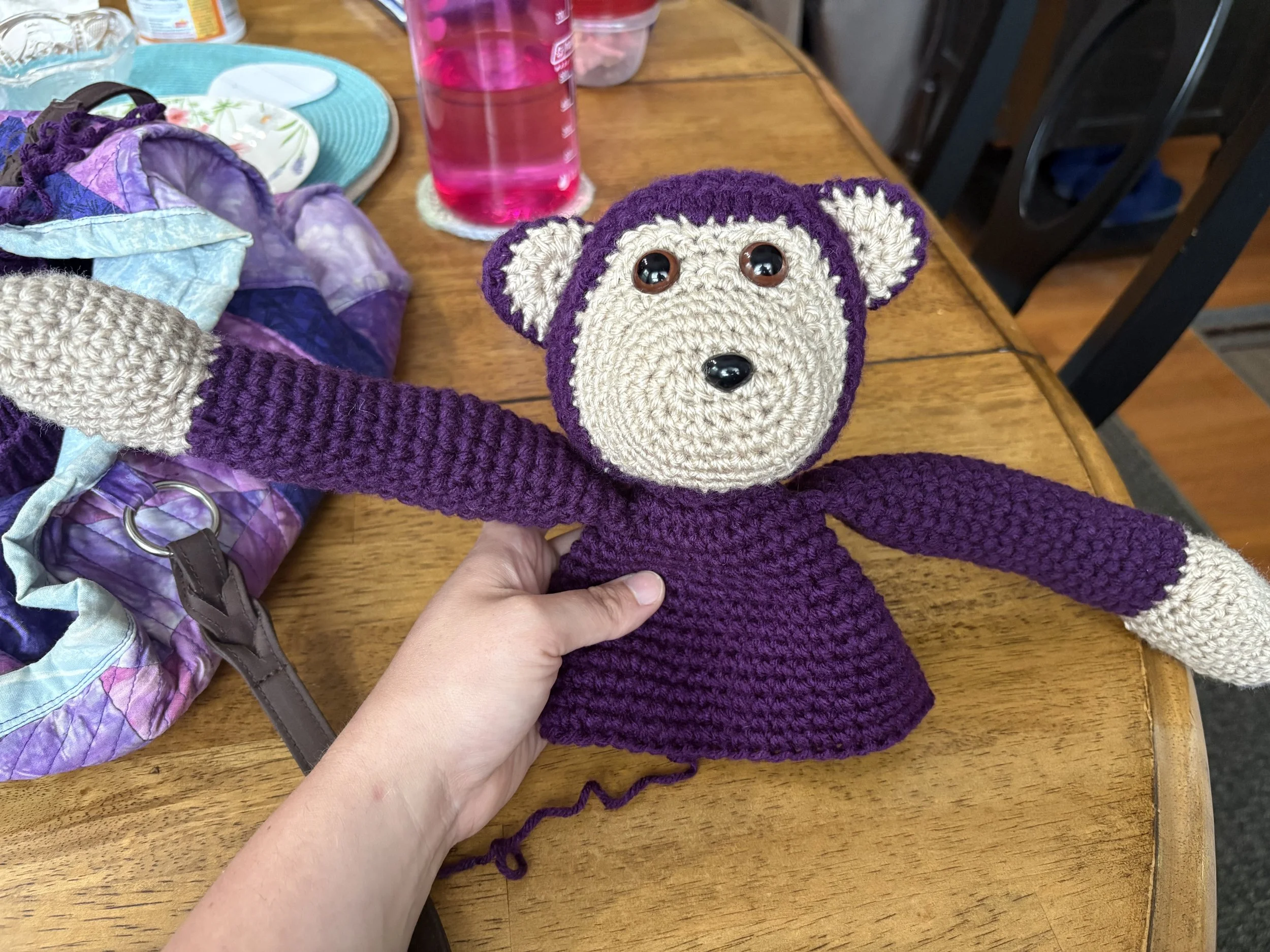
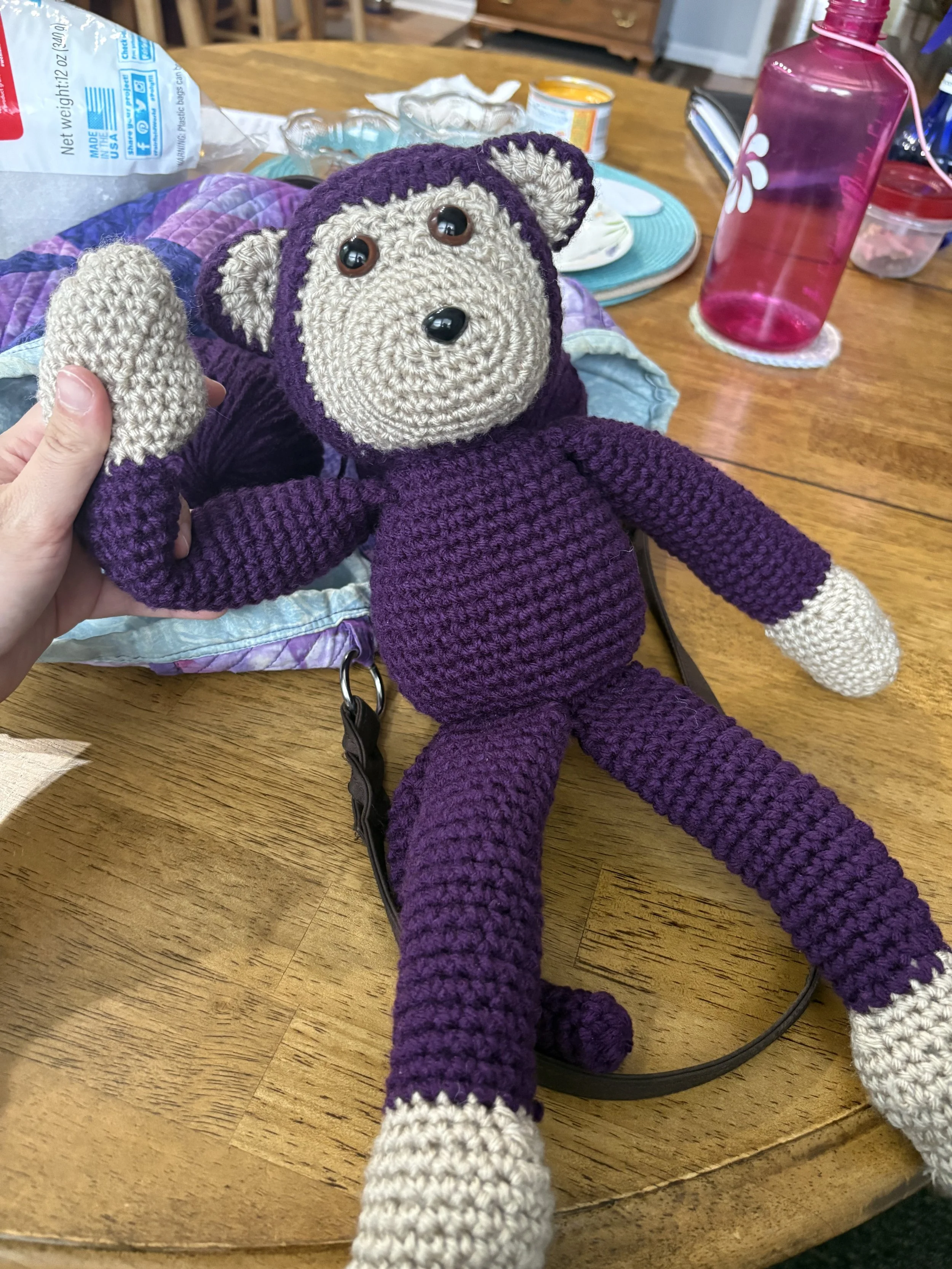
The point I am trying to make here, however, is that once you start making them, you probably won’t be able to stop…
At least that’s been my experience…
Because I had a really strong touch of “crafter’s audacity” when I was younger, I immediately tried to jump into Amigurumi before I even successfully finished my first few granny square patterns.
And, truth be told, a lot of that was because of my Grandma’s creation. If she could do it, then why couldn’t I?
And let me tell you, it has been a journey learning the ends and outs of this style of crochet!
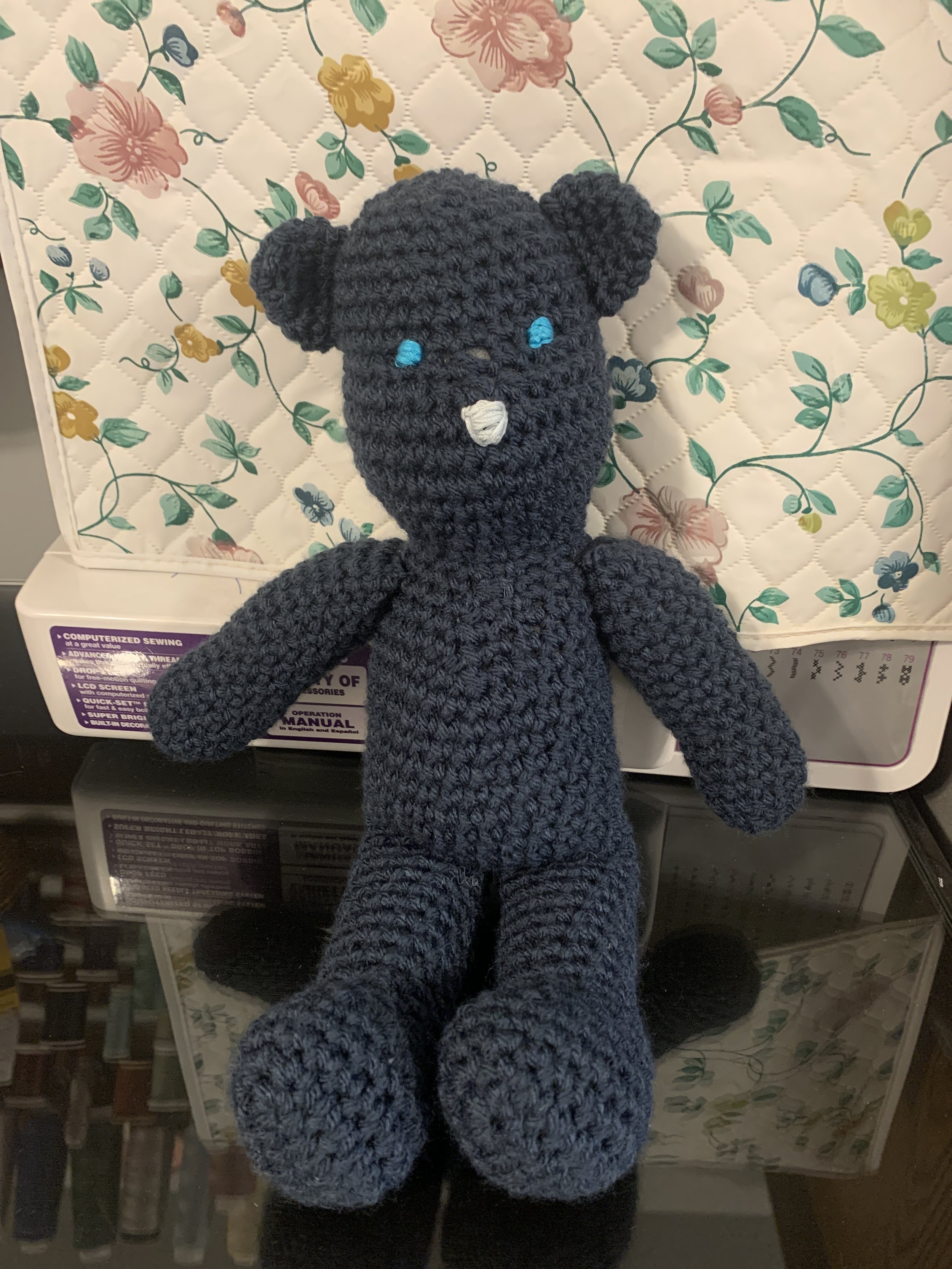
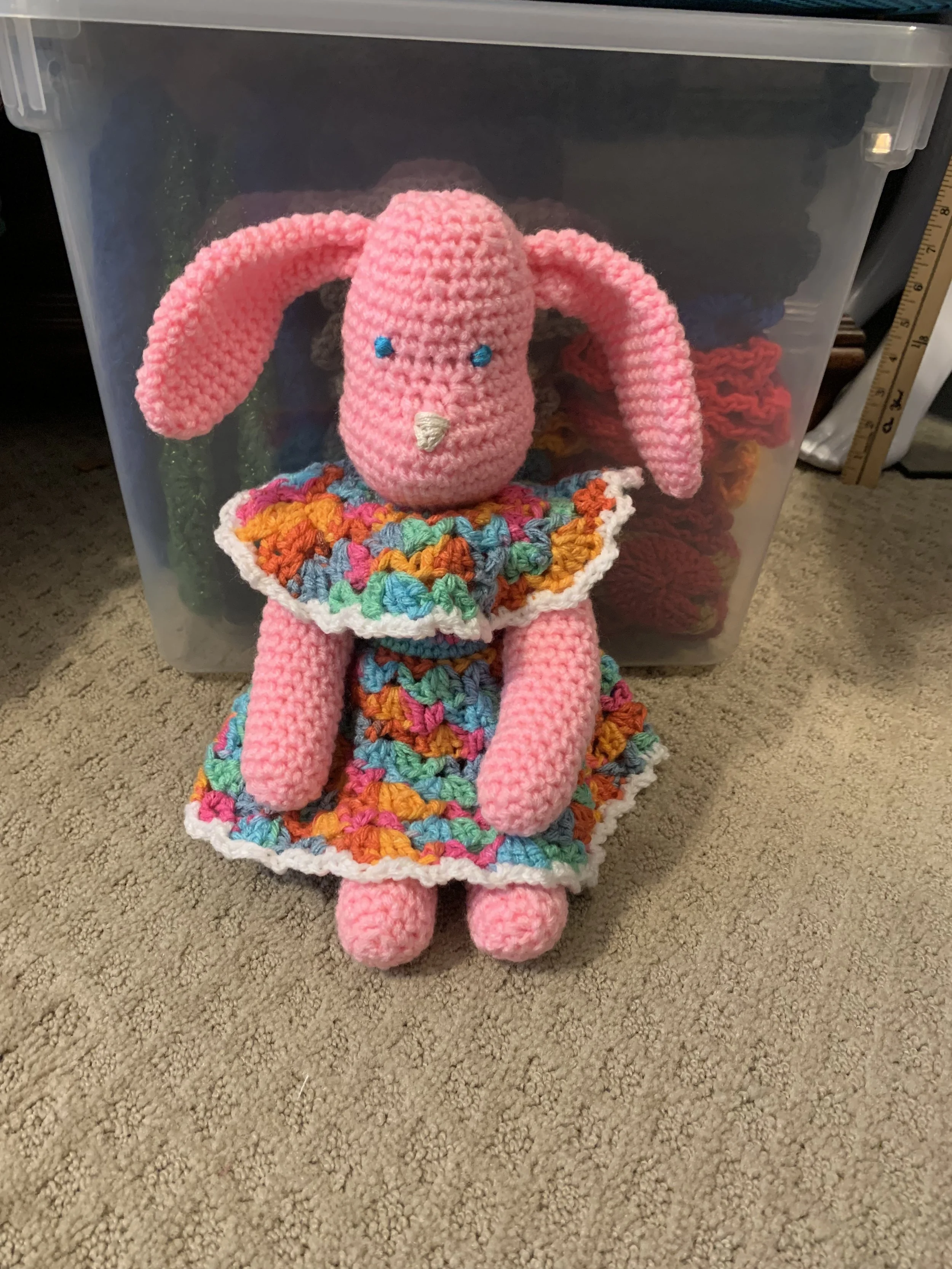
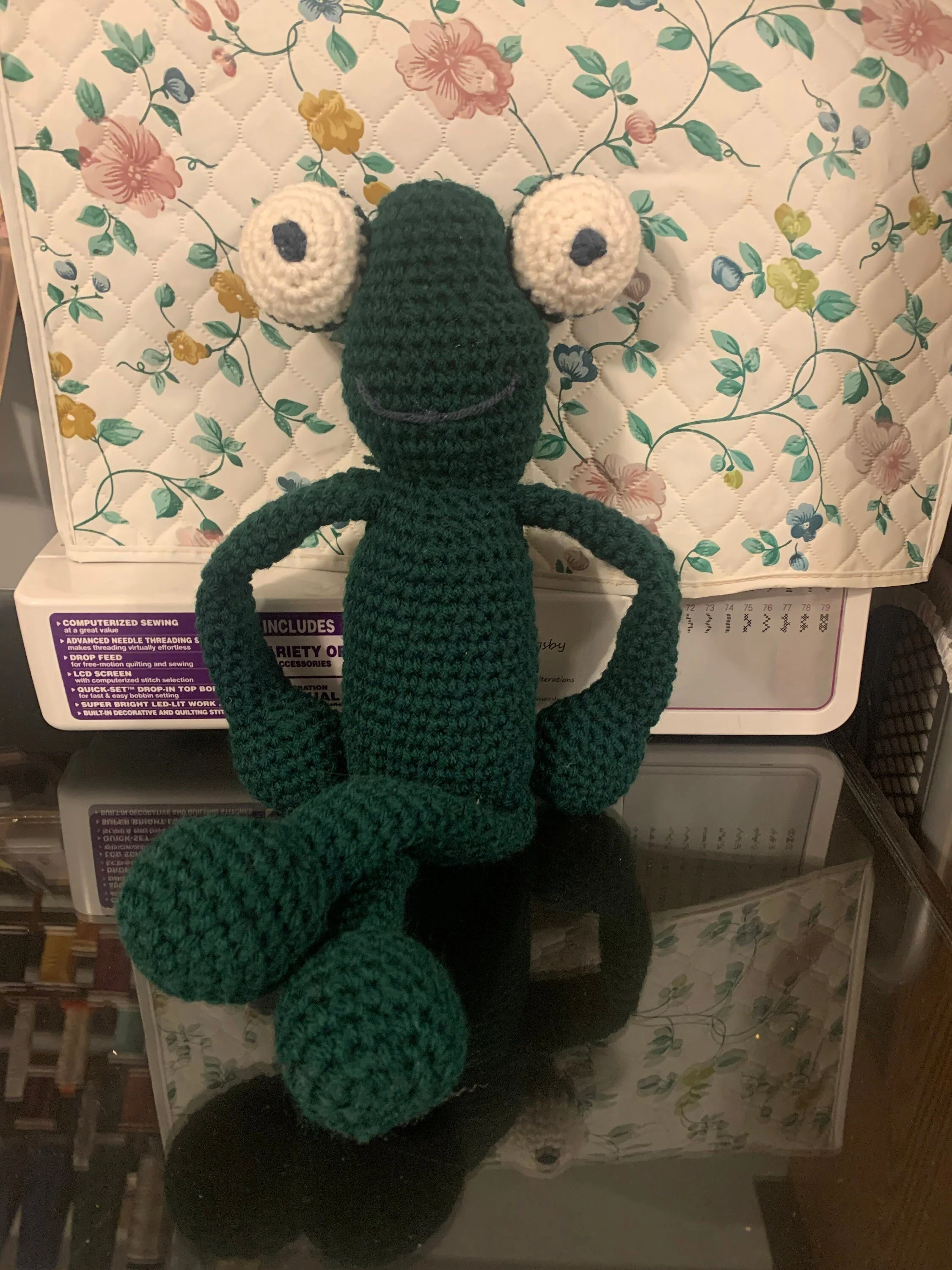

Sadly, I haven’t been able to find very many examples of my earlier attempts at Amigurumi (either I gave away them long ago, and/or didn’t think to take pictures before I scrapped them for parts… as is the way with juvenilia!)
But what I can tell you is that I’ve learned there’s so much more to making these little guys than I initially anticipated:
You have to keep certain health-related conditions in mind, especially where younger children are concerned:
Safety-eyes or embroidery for faces… absolutely NO BUTTONS for children under 3!
Natural fibers are better for children under 10... they’re more likely to cuddle to their plush and I don’t want them breathing in micro-plastics while they sleep
In the event of wool allergies, you may need to switch to cotton, linen, bamboo, hem, etc…. unless the parents know the specific type of wool-allergen
You have to consider the stuffing you want to use for which kinds of projects:
Again, natural fibers are preferred for younger children because they will handle their toys a great deal,
Synthetic stuffing is typically cheaper for pieces that are displayed for their decorative value
Even the way you wrap YOH (yarn over hook) can have an effect on the toy!
one direction creates tighter stitching, making it harder for stuffing to fall out,
the other creates a looser finish, more ideal for pieces that need drape and soft hand,
It really is something of a mix between a science, an art, and a discipline in its own right… it would have to be in order to become the industry that it currently is.
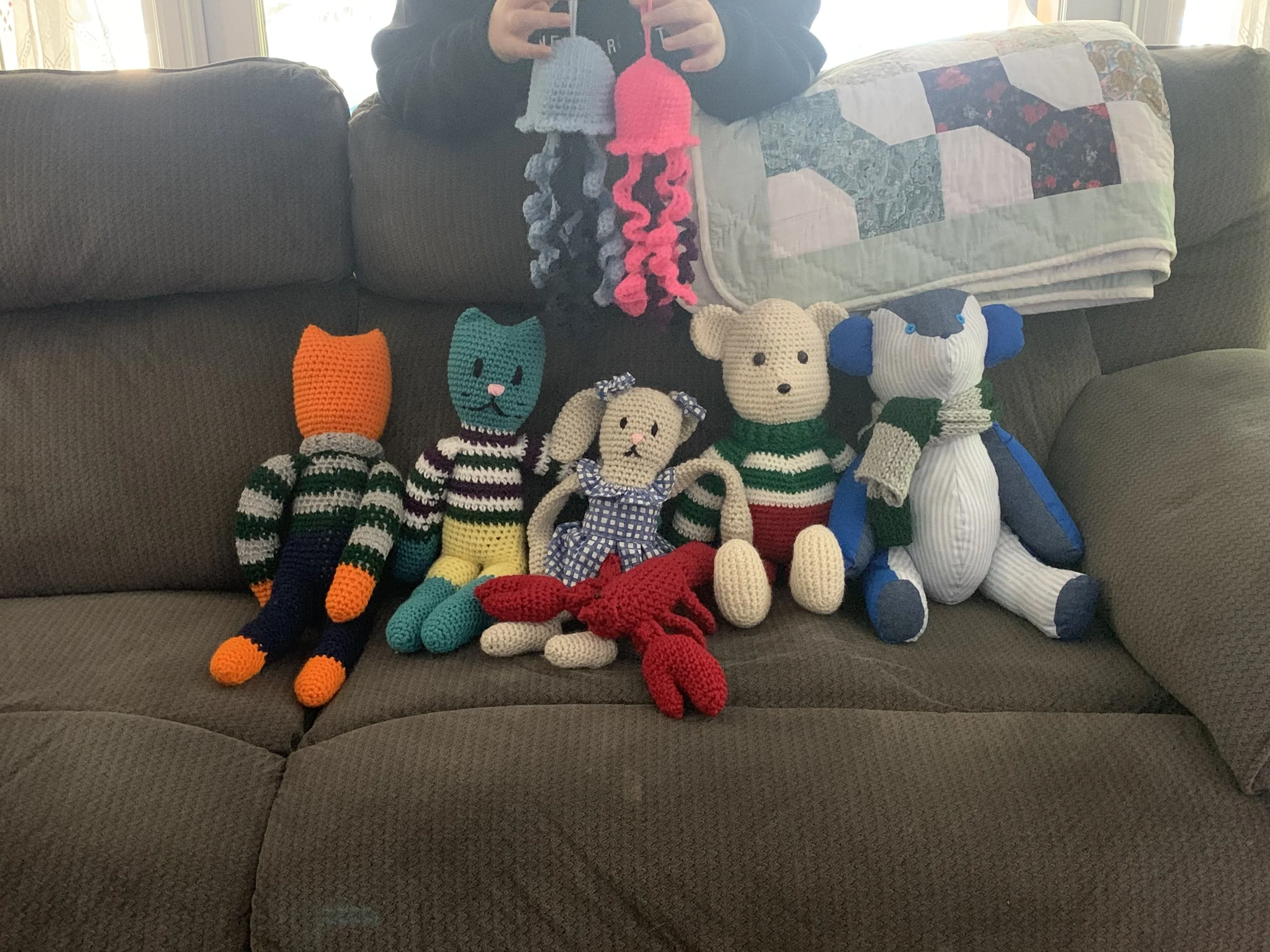
But here’s the less-intimidating fact of working Amigurumi: like other forms of art, you must first make a big pile of garbage before you hit your stride…
That analogy always sounds better in my head, but bare with me, we’re gonna roll with it:
My point is, you’re gonna have to make a lot of mistakes and take many, many mis-steps before you land on the technique that works for you and discover your own artistic-sensibilities; the two usually go hand in hand.
The only way I even came up with my “Cool Kittens” was taking a shot in the dark and experimenting for funsies:
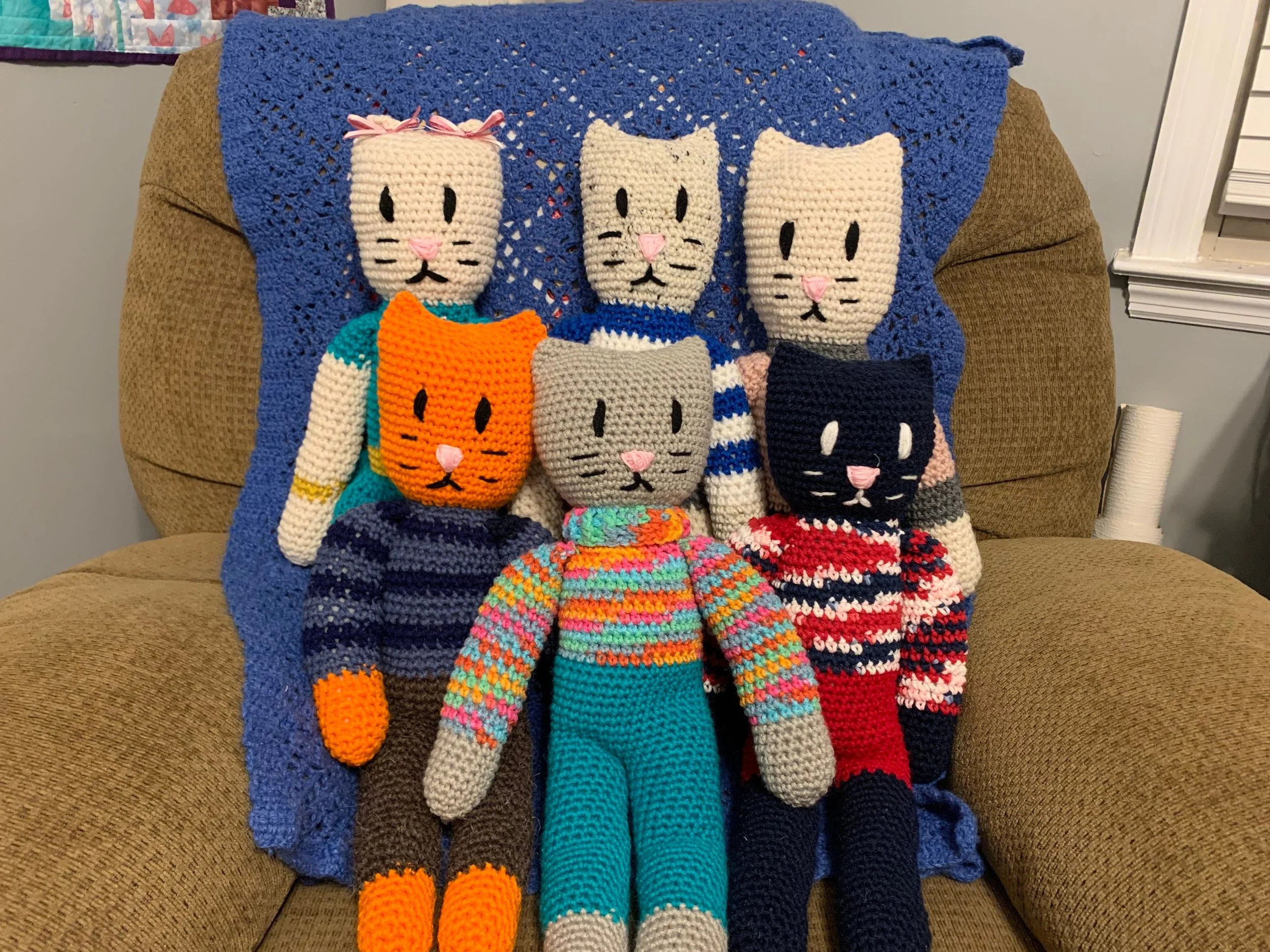
To this day, it’s still one of the best-selling projects my studio’s ever produced (I sold 16 of them in the first year I started making them!)
As of now, I’m about 23 years into my crocheting journey. That’s a lot of time to practice and study - though I’ll argue that I’ll never be done practicing or studying.
One thing a lot of people take for granted when it comes to artists - in every medium - is that you are never done training. As an artist you are effectively signing up to train and study for the rest of your life… and all for very little (if any) regular pay.
I know - it’s kind of a drag.
But for me personally, I’m mostly happy with this arrangement (mostly, not completely - though that’s a discussion for another day):
I can use my skill to put something good back into the world, every time I pick up my hook. I can give perfect strangers several things that they can’t get from a lot of multi-billion dollar companies: quality, care, an actual community - at the very least and I be “their gal” when they suddenly find themselves in an unusual need. Those moments when you say to someone “I got a guy/ I got a gal”… yeah, that’s me.
I’m your gal ;)
And, honestly, that makes it all worth with the while.